
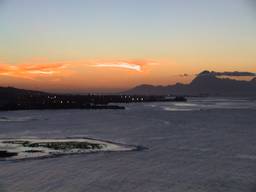
Pointe Vénus et phare de Mahina
VerifiedSociety Islands, Tahiti, Mahina
- Pointe Vénus Tahiti
- Mahina black-sand beach
- Pointe Vénus lighthouse
About
Pointe Vénus extends into Matavai Bay, on the north coast of Tahiti, in the commune of Mahina. It is both a large public black-sand beach, popular with families at weekends, and one of the island’s most historically significant sites.
This is where James Cook set up the observatory in 1769 from which his team observed the planet Venus passing in front of the Sun, the event that gave the site its name. The bay later welcomed the Bounty in 1788, followed by the first Protestant missionaries in 1797. The white lighthouse, built in 1867, still watches over the point, surrounded by plaques and signs recounting these events.
The site is managed by the Service du tourisme. It is open every day from 8 a.m. to 6 p.m., with free parking, benches in the shade of trees, picnic areas and supervised swimming.
The black sand heats up quickly in direct sunlight: bring sandals. Stay within the swimming area, keep away from the reef when the swell is strong, and take your rubbish with you. Snacks and small shops are located near the beach.
Photos: David Broad, CC BY 3.0; Garegnani Denis, CC BY-SA 4.0; Celia Guerrieri, CC BY-SA 4.0; Matthew Dillon, CC BY 2.0 (via Wikimedia Commons); Google Maps.
Other spots on Tahiti


Visit Belvédère de Taravao in Taiarapu-Est, Tahiti, for views of the isthmus, lagoon and the landforms of the peninsula.

Discover Belvédère du Tahara’a in Arue, with views over Matavai Bay and Moorea, as well as its history and landscaped esplanade.

Discover Notre-Dame Cathedral in Papeete, a historic Tahiti landmark and kilometer zero, in the heart of the city near the municipal market.

Discover the Mara’a Caves in Paea, on Tahiti’s west coast, with their caverns, freshwater pools and legends at the foot of a vegetated cliff.